
Operations & Maintenance
Reducing Forklift Fleet Running Costs: Where the Money Actually Goes
Purchase price is the smallest part of what a forklift costs you. Energy, damage and downtime are the big three, and all three respond to management.
8 min read · Last updated 13 August 2026
Across a typical Irish fleet, purchase or hire accounts for roughly 30–40% of lifetime cost; energy, maintenance, damage and downtime account for the rest. The biggest controllable savings come from right-sizing the fleet to actual utilisation, moving indoor trucks to electric or lithium, putting planned maintenance ahead of breakdown repair, and cutting impact damage through operator training. Most fleets over five trucks can take 15–25% out of cost per operating hour without replacing a single machine.
Where the money goes
| Cost area | Share of lifetime cost | How controllable |
|---|---|---|
| Acquisition (buy, finance or hire) | 30–40% | Medium — at purchase only |
| Energy or fuel | 15–25% | High — power source and driving habits |
| Planned maintenance and parts | 15–20% | High — planned beats reactive |
| Impact damage and abuse repairs | 10–20% | Very high — training and accountability |
| Downtime (lost productivity) | 10–15% | High — response times and spares |
| Tyres and consumables | 3–5% | Medium |
Start with utilisation, not with quotes
Read the hour meters across the fleet for a month. Most Irish operations discover at least one truck running under 15 hours a week — a machine that is being paid for, insured, serviced and examined for very little return.
- Log every truck's hours weekly for four weeks.
- Rank by hours per week; anything under 20% of the busiest truck is a candidate to remove.
- Check whether peaks are genuinely simultaneous or just badly scheduled.
- Cover true seasonal peaks with short-term hire instead of owning capacity all year.
- Redeploy or return the surplus truck and re-measure.
Energy: the fastest structural saving
| Power source | Relative energy cost per hour | Notes |
|---|---|---|
| Electric (lithium) | Lowest | Highest charge efficiency, opportunity charging, no battery swaps |
| Electric (lead-acid) | Low | Charging losses of roughly 15–20%, plus charge-room space and watering labour |
| LPG | Substantially higher | Bottle handling, storage and delivery logistics on top of the gas itself |
| Diesel | Highest | Fuel plus a heavier engine servicing burden and emissions restrictions indoors |
Relative ranking only. Work out your own figures from your electricity tariff, your fuel prices and the truck's measured consumption — we will run that calculation with you as part of a site survey.
For indoor work, moving from diesel or LPG to electric is normally the single largest structural saving available on energy alone, before lower maintenance is even counted. Multiply the per-hour difference by your actual annual operating hours — on a truck running a full single shift, the annual figure is usually large enough to change the buying decision on its own.
Damage: the line nobody budgets for
- ›Fit impact sensors or telemetry so knocks are recorded, not hidden.
- ›Refresher training every three years, and immediately after any incident.
- ›Protect rack ends, columns, doors and pedestrian barriers — cheaper than repairing them repeatedly.
- ›Attribute damage to shifts and drivers, and review it visibly. Anonymous damage stays constant.
- ›Enforce the daily pre-use check with a signed record; unreported defects become expensive failures.
One rule that pays for itself
No truck leaves the charge point without a completed daily check. Fleets that enforce this consistently see impact damage and unplanned downtime fall together, because both share the same root cause.
Planned maintenance beats reactive repair
A planned service is scheduled around your operation; a breakdown is scheduled around the fault. The parts cost is similar — the difference is the callout, the premium on emergency parts and the lost hours. A contract with a defined response SLA converts a volatile cost into a fixed one and puts the supplier's incentives on uptime.
- ›Service on hour meter readings, not calendar months.
- ›Group planned maintenance, Thorough Examination and operator refreshers into one visit.
- ›Hold a small stock of the filters and consumables for the next service.
- ›Track cost per operating hour per truck — it identifies the machine to replace long before it fails.
Eleven actions, in order of payback
- Measure hours per truck for four weeks.
- Remove or redeploy the least-used truck.
- Move indoor engine trucks to electric.
- Consider lithium where the fleet runs more than one shift.
- Put every truck on planned maintenance with a response SLA.
- Enforce daily pre-use checks with signed records.
- Run refresher operator training on a three-year cycle.
- Fit impact protection at every repeatedly damaged location.
- Right-size capacity — stop hiring 3.5t to move 1.8t.
- Cover seasonal peaks with hire rather than ownership.
- Review cost per operating hour quarterly, per truck.
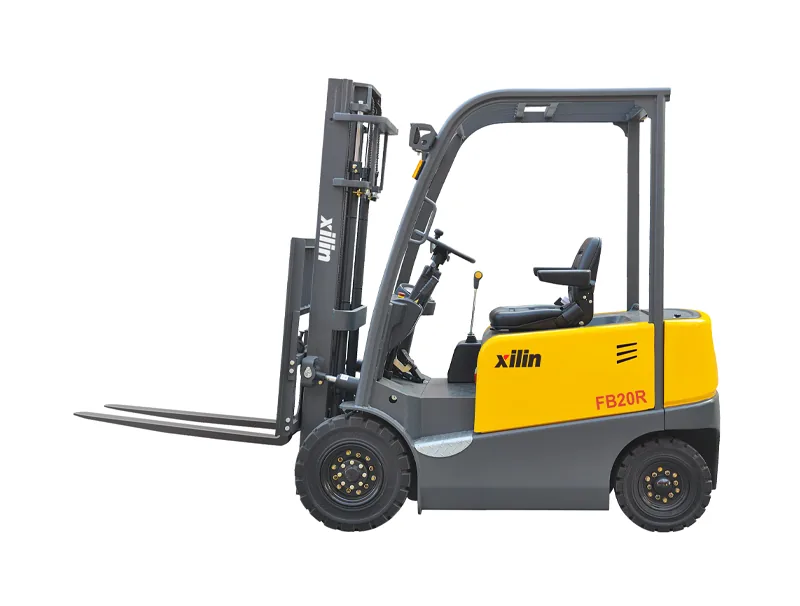
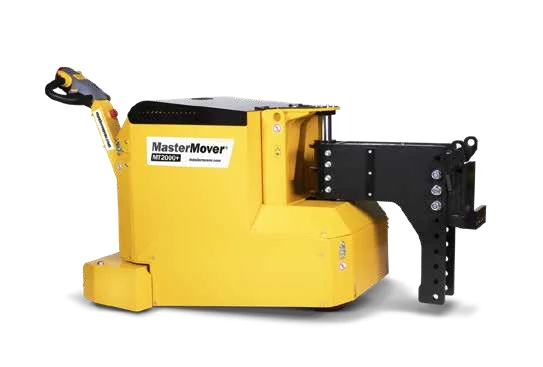
Equipment we'd recommend
Models from the AWE range that suit the scenarios above. Specs are pulled straight from the product pages.
Frequently asked questions
Written by
The AWE Forklifts Team
Materials handling engineers, trainers and account managers, Rathcoole, Co. Dublin
AWE has supplied, hired, serviced and inspected materials handling equipment for Irish industry since 1985. Our guides are written by the same engineers who service the trucks, the instructors who deliver operator training, and the account managers who quote the hire rates — not by outside copywriters.
- Trading in Ireland since 1985
- Authorised Xilin forklift dealer for Ireland
- Official MasterMover electric tug distributor for Ireland
- Dublin workshop, parts store and training facility
- Nationwide mobile engineers, priority contract response
Technically reviewed by AWE service department, Rathcoole, Co. Dublin.
Keep reading
Operations & Maintenance
Forklift Maintenance Schedule: Daily, Weekly, Monthly and Annual
Most forklift breakdowns are predictable. A four-tier schedule — daily, weekly, monthly, planned service — catches the faults before they become downtime.
7 min read
Buying & Costs
Lithium vs Lead-Acid Forklift Batteries: The Five-Year Cost
Lithium costs more up front and saves in three places: charging infrastructure, labour and battery replacement. Whether that adds up depends almost entirely on your shift pattern.
8 min read
Buying & Costs
Forklift Hire Rates in Ireland — Daily, Weekly and Monthly Explained
Hire quotes are rarely comparable because everyone bundles different things. Here is how Irish forklift hire is priced, what should be included, and where the extras hide.
8 min read