
Choosing Equipment
Electric Tug Sizing Guide: Matching Load Weight to the Right MasterMover
Tug sizing is not just load weight. Gradient, wheel count, floor surface and coupling type decide whether a machine moves the load or slips on the spot.
8 min read · Last updated 1 September 2026
Size an electric tug on four inputs: total load weight, the gradient it must climb, the floor surface and the number and type of wheels under the load. Weight alone is not enough — a well-rolling load on smooth concrete needs far less tractive effort than the same weight on castors crossing an expansion joint or a ramp. MasterMover machines span roughly 1,500 kg up to 70,000 kg, so the practical job is matching duty to range rather than finding a machine strong enough.
The four inputs that decide the model
- Total load weight, including the trolley, cage, bogie or bed the load sits on.
- Maximum gradient, including short ramps, dock approaches and threshold plates.
- Floor surface and condition: polished concrete, resin, tarmac, expansion joints, drainage channels.
- Wheels: how many, what diameter, what material, and how freely they swivel.
Rolling resistance beats raw weight
Small, hard, poorly maintained castors can double the effort needed to move a load. Fixing the wheels under the load is sometimes cheaper than buying a bigger tug.
Where each range fits
| Typical load | Application | Range to look at |
|---|---|---|
| Up to ~1,500 kg | Roll cages, laundry trolleys, hospital beds | SmartMover |
| 1,500–5,000 kg | Production trolleys, process skids, bins | SmartMover / MasterTug |
| 5,000–20,000 kg | Machine beds, aircraft ground equipment, heavy bogies | MasterTug |
| Trailers and wheeled plant | Yard shunting, trailer positioning | MasterTow |
| Up to 70,000 kg | Plant machinery, modular buildings, shipyard sections | PS7000+ |
| Washdown and hygiene areas | Pharma, food, cleanroom | Stainless steel range |
Ranges overlap deliberately — coupling design and gradient often decide between two candidate models.
Coupling is half the specification
The tug transfers weight from the load onto its own drive wheel to generate traction. That means the coupling has to be designed for the specific trolley or bogie, not bolted on as an afterthought. Getting it right is what separates a tug that moves the load on a 1:12 ramp from one that spins.
- ›Fixed couplings for a single dedicated load type give the best traction transfer.
- ›Quick-release couplings suit fleets of similar trolleys.
- ›Tow-pin and ball couplings suit trailers and wheeled plant.
- ›Send photographs and dimensions of the load's chassis when asking for a recommendation.
Why a tug instead of a forklift
- ›One operator instead of a team pushing, with no manual handling injury exposure.
- ›No forklift licence required to operate, although task-specific training is still needed.
- ›Controlled, slow-speed movement in tight or pedestrian-heavy areas.
- ›Far lower risk of load or building damage than towing with a forklift.
Frequently asked questions
Written by
The AWE Forklifts Team
Materials handling engineers, trainers and account managers, Rathcoole, Co. Dublin
AWE has supplied, hired, serviced and inspected materials handling equipment for Irish industry since 1985. Our guides are written by the same engineers who service the trucks, the instructors who deliver operator training, and the account managers who quote the hire rates — not by outside copywriters.
- Trading in Ireland since 1985
- Authorised Xilin forklift dealer for Ireland
- Official MasterMover electric tug distributor for Ireland
- Dublin workshop, parts store and training facility
- Nationwide mobile engineers, priority contract response
Keep reading
Choosing Equipment
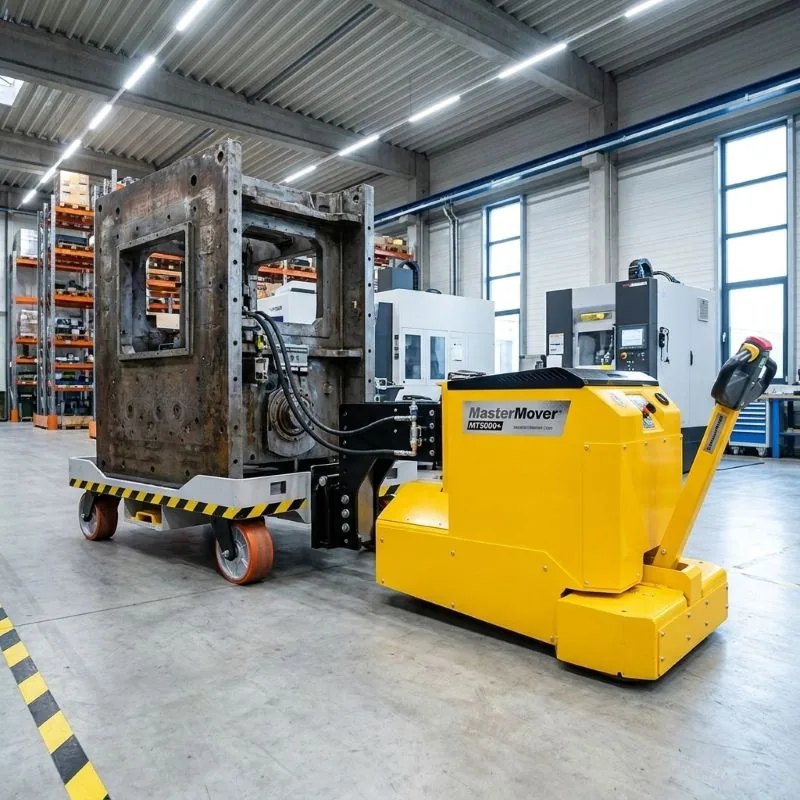
Electric Tugs vs Forklifts: Moving Heavy Loads Safely Indoors
If the load is already on wheels, a forklift is often the wrong tool. Electric tugs move up to 70,000 kg with one pedestrian operator and no lifting at all.
7 min read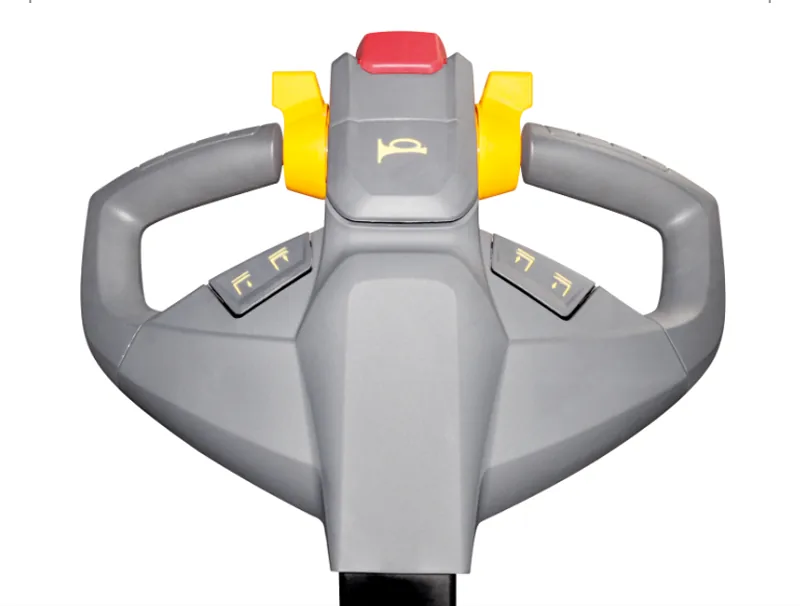
Choosing Equipment
Pallet Truck vs Stacker vs Counterbalance: Choosing the Right Truck
Four machine types, one decision. Lift height and aisle width settle it faster than any spec sheet — here is the selection logic we use on site surveys.
7 min read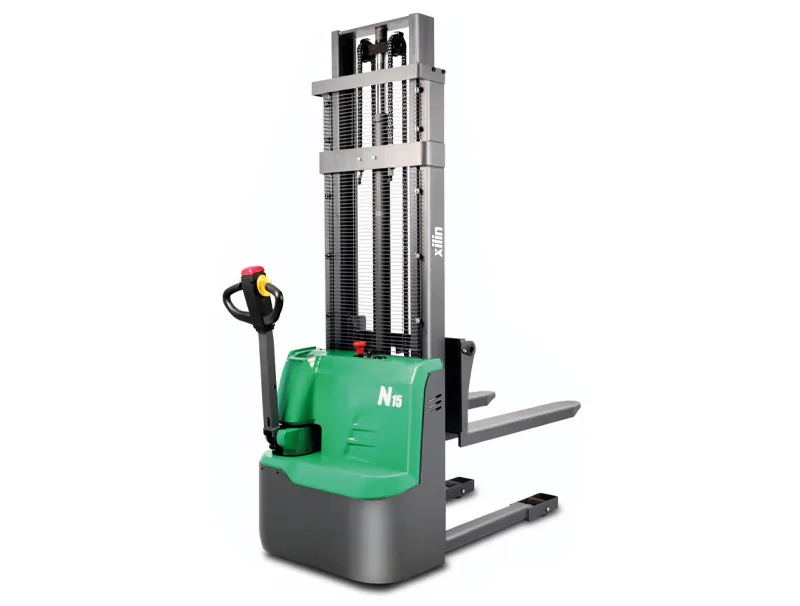
Choosing Equipment
How to Choose Forklift Capacity: 1.5t vs 2t vs 2.5t vs 3t
The number on the data plate is not the weight you can lift. Load centre, mast height and attachments all take a bite out of it — here is how to size a truck properly.
8 min read