
Choosing Equipment
Sizing a Floor Cleaning Machine: Matching Scrubber or Sweeper to Your Floor Area
Most floor cleaning machines are bought a size too small. Here is how to size one against your real floor area and your real cleaning window.
8 min read · Last updated 1 September 2026
Size a floor cleaning machine on area, cleaning window and obstruction. Divide the floor area by the time available to get the square metres per hour you need, then choose a working width and tank capacity that deliver it without constant refilling. As a planning rule, walk-behind scrubbers suit up to roughly 2,000–3,000 m² per shift, ride-on machines take over above that, and combined scrub-and-sweep machines earn their keep where the floor is both dusty and dirty.
The calculation, in three steps
- Measure the true cleanable area — exclude racking footprints, plant and permanently blocked bays.
- Divide by the cleaning window in hours to get required m²/hour.
- Add 30–40% for turning, refilling, emptying and obstruction; the theoretical figure on a spec sheet is never the real one.
| Cleanable area per shift | Typical machine | Working width |
|---|---|---|
| Up to 800 m² | Compact walk-behind scrubber | About 350–450 mm |
| 800–2,500 m² | Mid walk-behind scrubber | About 500–650 mm |
| 2,500–5,000 m² | Small ride-on scrubber | About 700–850 mm |
| 5,000 m²+ | Ride-on scrubber or combined machine | About 900 mm and up |
Indicative planning bands. Aisle width, obstruction and soil load can move a site up or down one step.
Scrub, sweep, or both
- ›Sweeper: dry debris — dust, swarf, packaging, leaves, yard grit.
- ›Scrubber dryer: wet soiling, tyre marks, grease films and hygiene requirements.
- ›Combined machine: both in one pass, which is where large mixed-use warehouses and manufacturing floors save the most labour.
- ›Sweeping before scrubbing extends brush and squeegee life on any floor carrying loose debris.
The site factors people forget
- Narrowest aisle and tightest turn — a wider machine that cannot get between racking cleans nothing.
- Door heights, lift dimensions and ramp gradients between cleaning zones.
- Water fill and disposal points: a machine that has to travel 200 m to refill loses a third of its productivity.
- Noise limits where cleaning happens near offices or during trading hours.
- Battery runtime against the full cleaning window, including the drying pass.
Trial before you buy
Floor type and soil load vary enormously between Irish sites. A demonstration on your own floor, with your own soiling, settles the specification argument faster than any brochure.
Frequently asked questions
Written by
The AWE Forklifts Team
Materials handling engineers, trainers and account managers, Rathcoole, Co. Dublin
AWE has supplied, hired, serviced and inspected materials handling equipment for Irish industry since 1985. Our guides are written by the same engineers who service the trucks, the instructors who deliver operator training, and the account managers who quote the hire rates — not by outside copywriters.
- Trading in Ireland since 1985
- Authorised Xilin forklift dealer for Ireland
- Official MasterMover electric tug distributor for Ireland
- Dublin workshop, parts store and training facility
- Nationwide mobile engineers, priority contract response
Keep reading
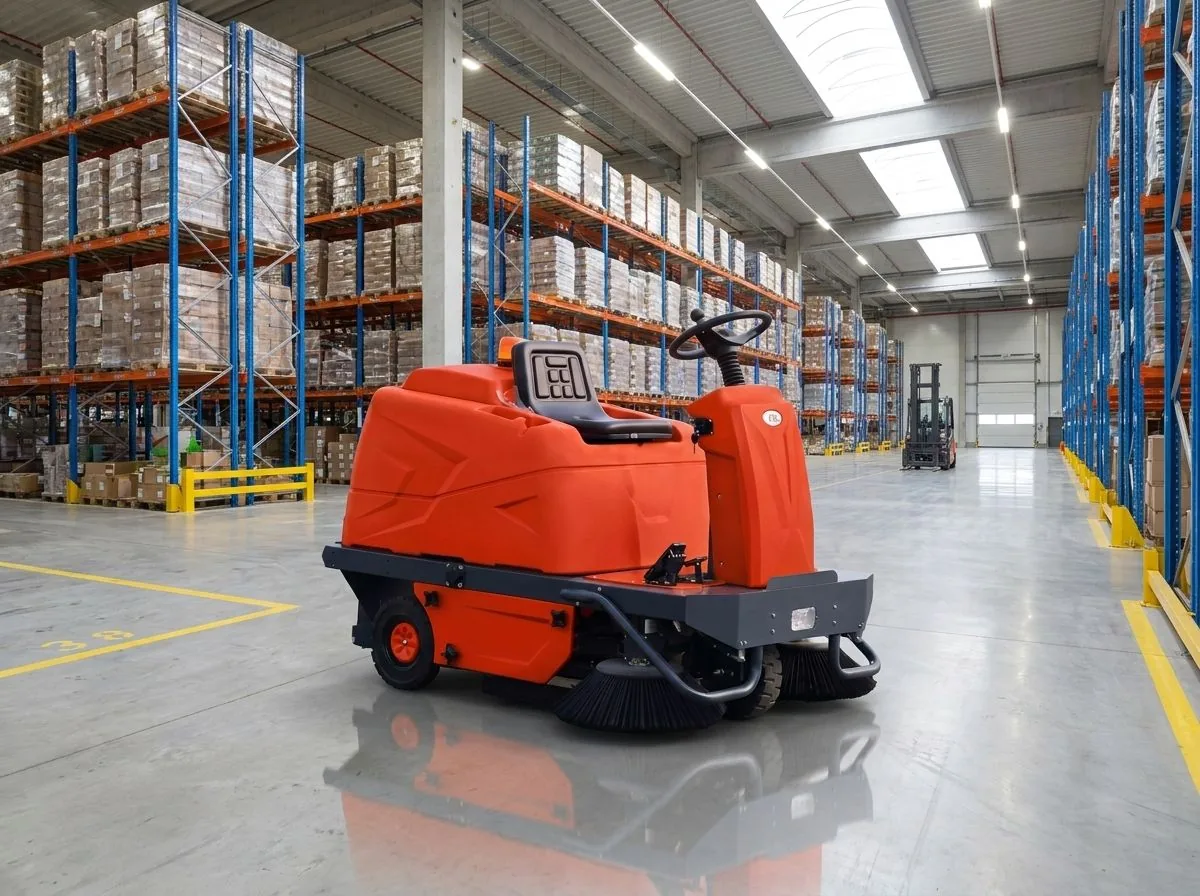
Choosing Equipment
Scrubber vs Sweeper vs Combined: Picking the Right Floor Cleaning Machine
Sweepers pick up dry debris, scrubbers wash and dry, combined machines do both in one pass. Matching the machine to the soil type is what decides the outcome.
6 min read
Choosing Equipment
Cold Store and Food-Grade Handling Equipment: What Changes
Below 0°C, standard equipment fails in ways that look like bad luck but are entirely predictable. Here is what to specify for chilled, frozen and food-grade areas.
8 min read
Operations & Maintenance
Reducing Forklift Fleet Running Costs: Where the Money Actually Goes
Purchase price is the smallest part of what a forklift costs you. Energy, damage and downtime are the big three, and all three respond to management.
8 min read