
Operations & Maintenance
Forklift Tyres: Cushion vs Pneumatic vs Polyurethane
Tyres are the cheapest part of a forklift and the one most often ignored. The wrong compound wrecks floors, and worn tyres quietly cut stability and capacity.
7 min read · Last updated 13 August 2026
Use polyurethane tyres on powered pallet trucks and stackers indoors, cushion (press-on solid) tyres on indoor counterbalance trucks working on smooth concrete, and pneumatic tyres — solid or air-filled — for yards and rough ground. Non-marking compounds are required in food, pharma and cleanroom environments. Replace at the manufacturer's wear line, generally 1,000–2,500 operating hours, because worn tyres reduce stability, increase mast shake and transmit damage into the chassis.
The four tyre types
| Type | Best for | Life | Trade-off |
|---|---|---|---|
| Polyurethane | Pallet trucks, stackers, smooth indoor floors | 1,500–3,000 h | No shock absorption; poor on debris |
| Cushion (press-on solid) | Indoor counterbalance, smooth concrete | 1,000–1,500 h | Harsh on uneven ground |
| Solid pneumatic | Mixed indoor/outdoor, yards | 2,000–3,000 h | Heavier, firmer ride, higher cost |
| Air pneumatic | Rough ground, gravel, construction | 1,500–2,500 h | Punctures, pressure maintenance |
Non-marking tyres — when you actually need them
Standard black tyres contain carbon black, which leaves scuff marks. Non-marking compounds omit it. They are essential in food production, pharmaceutical and cleanroom areas, and in any facility where floor appearance is audited.
- ›Expect slightly shorter life and a modest price premium versus black compounds.
- ›Some non-marking compounds build static charge — specify anti-static where electronics or flammable atmospheres are involved.
- ›Match compound across the fleet so a truck moved between areas does not undo the standard.
Reading wear before it costs you
- ›Most cushion tyres carry a moulded 50% wear line — at the line, replace.
- ›Chunking, cracking or exposed cord condemns a tyre immediately regardless of tread depth.
- ›Uneven wear across an axle points to alignment, bearing or overload problems.
- ›Flat spots come from spinning wheels or long standing — both are worth investigating.
- ›Increasing mast shake at height is often a tyre problem misdiagnosed as a mast problem.
Worn tyres reduce lift capacity
Ride height affects mast geometry and stability. A truck on badly worn tyres does not lift its rated load as safely as the data plate suggests, especially at height.
Cost and downtime planning
Press-on tyres are pressed off and on with a hydraulic press, so plan a workshop visit or a mobile press callout rather than roadside change. Doing all four at a scheduled service costs far less than two separate emergency visits.
| Job | Typical downtime | Best combined with |
|---|---|---|
| Press-on set of four | 2–3 hours | Scheduled service |
| Pneumatic set of four | 1–2 hours | Thorough Examination |
| PU wheels on a pallet truck | 30–60 minutes | Routine service |
Equipment we'd recommend
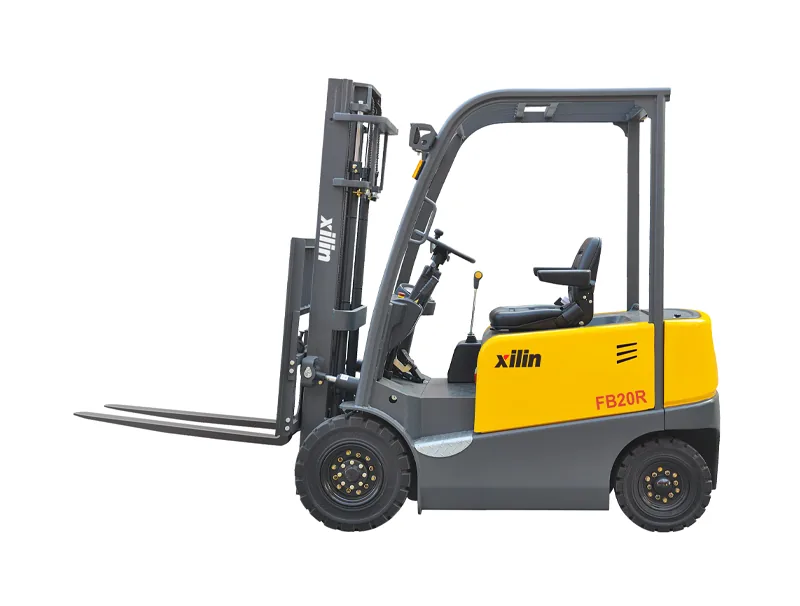
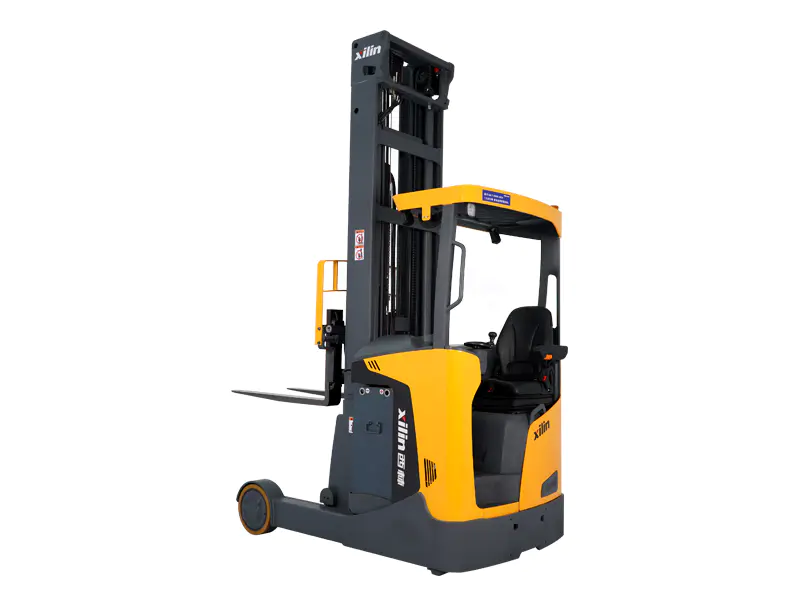
Models from the AWE range that suit the scenarios above. Specs are pulled straight from the product pages.
Frequently asked questions
Written by
The AWE Forklifts Team
Materials handling engineers, trainers and account managers, Rathcoole, Co. Dublin
AWE has supplied, hired, serviced and inspected materials handling equipment for Irish industry since 1985. Our guides are written by the same engineers who service the trucks, the instructors who deliver operator training, and the account managers who quote the hire rates — not by outside copywriters.
- Trading in Ireland since 1985
- Authorised Xilin forklift dealer for Ireland
- Official MasterMover electric tug distributor for Ireland
- Dublin workshop, parts store and training facility
- Nationwide mobile engineers, priority contract response
Technically reviewed by AWE service department, Rathcoole, Co. Dublin.
Keep reading
Operations & Maintenance
Forklift Parts: What Wears Out and When to Replace It
Every forklift has about a dozen parts that wear predictably. Knowing the limits turns unplanned breakdowns into scheduled, cheaper work.
8 min read
Operations & Maintenance
Forklift Maintenance Schedule: Daily, Weekly, Monthly and Annual
Most forklift breakdowns are predictable. A four-tier schedule — daily, weekly, monthly, planned service — catches the faults before they become downtime.
7 min read
Safety & Compliance
Forklift Daily Safety Checklist for Irish Sites
The pre-use check takes five minutes and is the single cheapest way to prevent both incidents and breakdowns. Here is the full walk-around, in the order that works.
6 min read