
Choosing Equipment
Warehouse Racking and Aisle Widths: Matching the Truck to the Rack
Aisle width decides which truck you can run — and truck choice decides how many pallet positions fit in the building. Get the pairing right before the racking goes in.
8 min read · Last updated 13 August 2026
As a working rule, a counterbalance forklift needs a 3.5–4.2 m aisle, a reach truck 2.7–3.2 m, a powered stacker 2.3–2.8 m and a pedestrian pallet truck around 2.1 m. Narrowing aisles from counterbalance to reach-truck width typically adds 20–30% more pallet positions in the same footprint, but requires a flatter floor, better lighting and trained operators. Decide the truck and the racking together — retrofitting either one afterwards is expensive.
Aisle width by truck type
| Truck | Working aisle (1200×1000 pallet) | Typical max lift | Notes |
|---|---|---|---|
| Pedestrian pallet truck | 2.1–2.4 m | Ground level | Loading and picking only |
| Powered stacker | 2.3–2.8 m | 3.5–5.4 m | Great value for low-bay racking |
| Reach truck | 2.7–3.2 m | 8.5–11 m | Standard for Irish high-bay |
| 3-wheel counterbalance | 3.2–3.6 m | 4.5–6 m | Tighter than 4-wheel, indoor use |
| 4-wheel counterbalance | 3.5–4.2 m | 4.5–7 m | Yard plus warehouse flexibility |
| Articulated / VNA | 1.6–2.0 m | 10–15 m | Highest density, most demanding on floors |
Working aisle including operating clearance. Confirm against the specific truck's turning radius (Ast) figure.
How to calculate the aisle you actually need
Manufacturers publish an Ast figure — the right-angle stacking aisle for a stated pallet size. Take that figure, add 100 mm clearance per side as a minimum, and add more if operators are new, floors are uneven or loads overhang.
- Find Ast in the truck data sheet for your pallet size and orientation.
- Add 200 mm total operating clearance.
- Check overhang: loads wider than the pallet eat clearance directly.
- Check the rack upright footprint and any pallet overhang beyond the beam.
- Allow for the widest thing that ever travels the aisle — often a cleaning machine or an order picker.
Racking type drives truck choice
| Racking | Density | Suits | Truck |
|---|---|---|---|
| Wide-aisle APR | Low | Many SKUs, full selectivity | Counterbalance or reach |
| Narrow-aisle APR | Medium | High SKU count, high throughput | Reach truck |
| Very narrow aisle | High | Maximum density, high bays | VNA / articulated |
| Drive-in | High | Few SKUs, large batches | Counterbalance with care |
| Push-back / pallet live | High | FIFO/LIFO bulk | Reach or counterbalance |
| Mobile racking | Very high | Cold stores, high land cost | Reach truck |
Floor flatness is not optional
Above about 6 m of lift, floor flatness governs safe operation. A slab that is fine for a counterbalance can put a reach or VNA truck out of tolerance at height. Have the floor surveyed before committing to a narrow-aisle design.
Gaining pallet positions without moving building
- ›Go up before you go narrow — a reach truck reaching 8.5 m instead of 5.4 m adds a full beam level.
- ›Match beam levels to actual pallet heights rather than a uniform pitch; most warehouses waste 150–300 mm per level.
- ›Move slow-moving stock into drive-in or push-back and keep selective racking for fast movers.
- ›Use a stacker or pallet truck for ground-level picking so the reach truck is never queuing.
- ›Re-check the two-way aisle assumption — many Irish sites can run one-way with better throughput.
Safety in narrow aisles
- ›Rack-end protection and upright guards at every aisle entry.
- ›Segregated pedestrian routes — narrow aisles and pedestrians do not mix.
- ›Aisle-end mirrors or proximity warning systems on blind corners.
- ›Annual racking inspection by a competent person, plus a weekly visual by a nominated person.
- ›Damage reporting culture: a struck upright is reported the same shift, not at the annual inspection.
Equipment we'd recommend
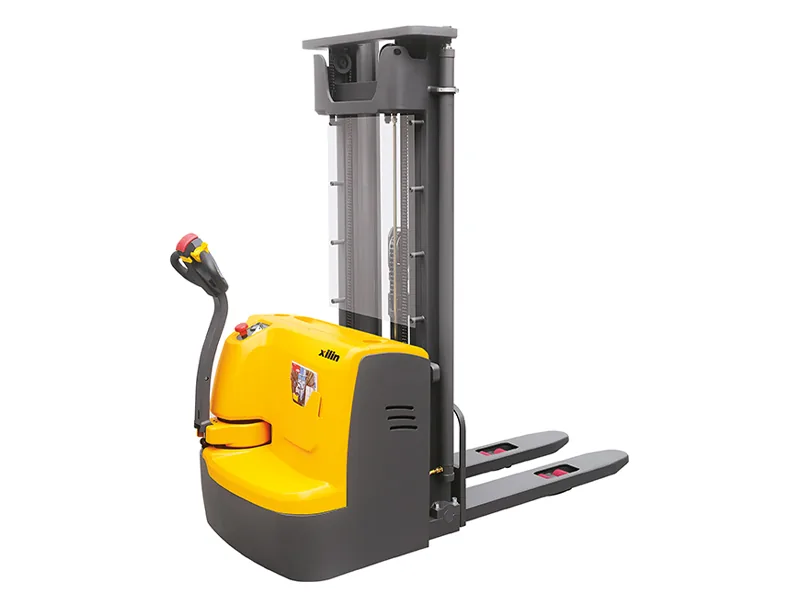
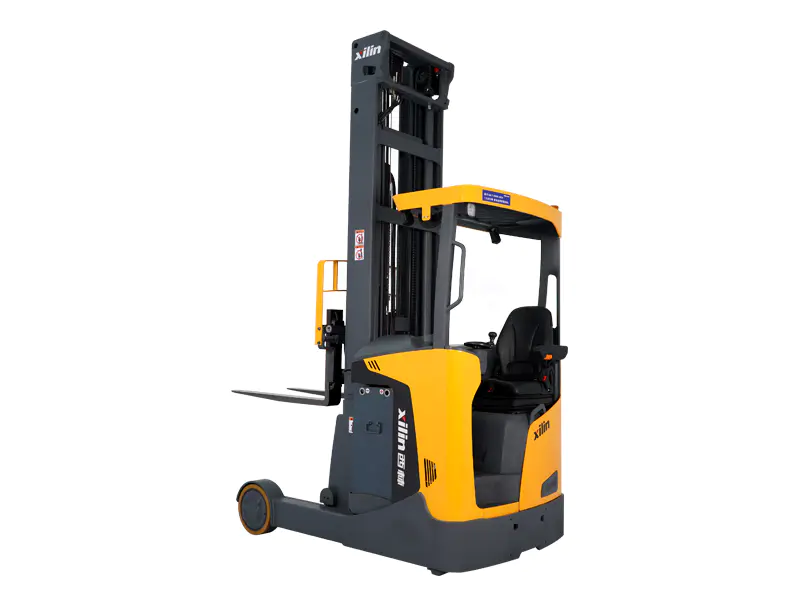
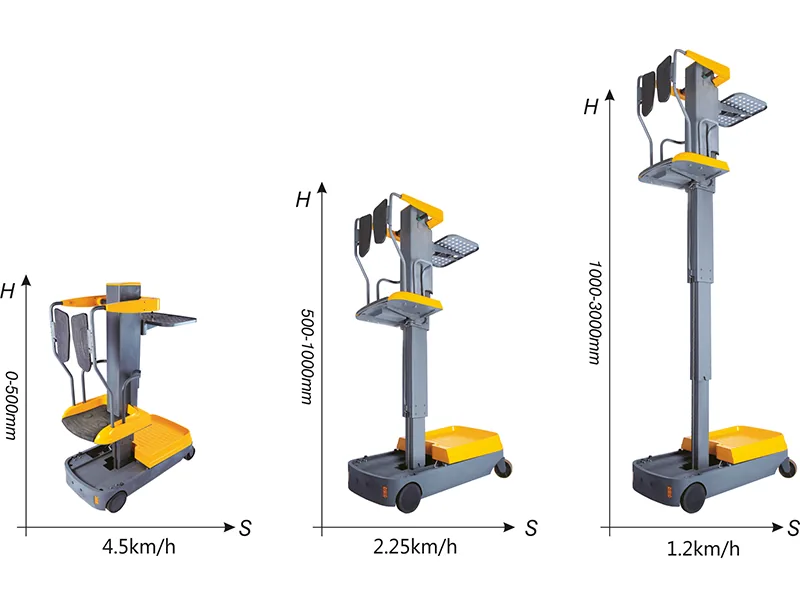
Models from the AWE range that suit the scenarios above. Specs are pulled straight from the product pages.
Frequently asked questions
Written by
The AWE Forklifts Team
Materials handling engineers, trainers and account managers, Rathcoole, Co. Dublin
AWE has supplied, hired, serviced and inspected materials handling equipment for Irish industry since 1985. Our guides are written by the same engineers who service the trucks, the instructors who deliver operator training, and the account managers who quote the hire rates — not by outside copywriters.
- Trading in Ireland since 1985
- Authorised Xilin forklift dealer for Ireland
- Official MasterMover electric tug distributor for Ireland
- Dublin workshop, parts store and training facility
- Nationwide mobile engineers, priority contract response
Technically reviewed by AWE engineering team, Rathcoole, Co. Dublin.
Keep reading
Choosing Equipment
How to Choose Forklift Capacity: 1.5t vs 2t vs 2.5t vs 3t
The number on the data plate is not the weight you can lift. Load centre, mast height and attachments all take a bite out of it — here is how to size a truck properly.
8 min read
Choosing Equipment
Pallet Truck vs Stacker vs Counterbalance: Choosing the Right Truck
Four machine types, one decision. Lift height and aisle width settle it faster than any spec sheet — here is the selection logic we use on site surveys.
7 min read
Choosing Equipment
Cold Store and Food-Grade Handling Equipment: What Changes
Below 0°C, standard equipment fails in ways that look like bad luck but are entirely predictable. Here is what to specify for chilled, frozen and food-grade areas.
8 min read